
Why Is Identity Theft Insurance Important for Your Organization
Identity theft insurance shifts the financial burden of forensic investigation and legal defense from your operating budget to a predetermined risk pool.
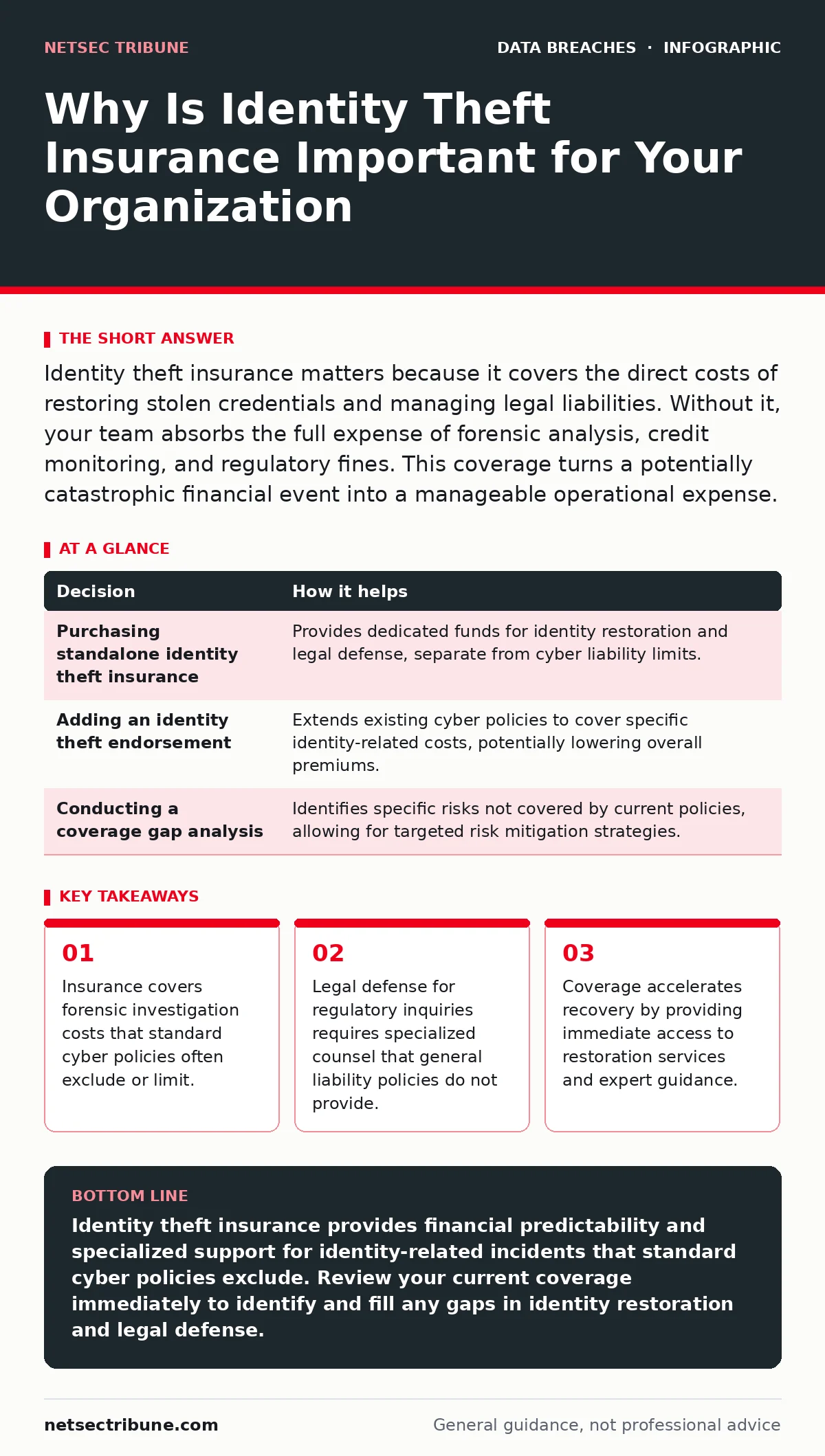
Identity theft insurance matters because it covers the direct costs of restoring stolen credentials and managing legal liabilities. Without it, your team absorbs the full expense of forensic analysis, credit monitoring, and regulatory fines. This coverage turns a potentially catastrophic financial event into a manageable operational expense.
Why is identity theft insurance important for organizational resilience
Identity theft insurance is important because it addresses the specific financial gaps left by standard cyber liability policies. Most organizations assume their existing coverage handles data breaches. This assumption fails when the breach involves the misuse of stolen identities rather than just the loss of data. Standard policies often focus on data exfiltration and system downtime. They rarely cover the long-tail costs of identity restoration for affected individuals. This distinction determines whether your recovery budget survives the incident.
The primary value lies in cost predictability. An identity theft incident can span months or years. During this time, your team must manage ongoing fraud alerts, legal notices, and customer communications. Without specific insurance, these costs drain your operating cash flow. With coverage, you pay a known premium for a known maximum payout. This structure protects your balance sheet from unexpected volatility. It allows you to plan for worst-case scenarios without paralyzing daily operations.
The hidden costs of uncovered identity fraud
When identity theft occurs without insurance, the financial impact extends far beyond the initial breach. You must pay for forensic investigators to determine how credentials were stolen. These experts charge hourly rates that escalate quickly. You also need to hire legal counsel to navigate breach notification laws. Each jurisdiction may have different requirements and penalties. Non-compliance results in fines that compound the original loss.
Your team also bears the cost of credit monitoring services for affected parties. Providing these services is often a legal or reputational necessity. You must pay for them out of pocket if no insurance covers them. Additionally, you lose productivity as staff divert time from core tasks to manage the crisis. This opportunity cost is rarely calculated but significantly impacts your bottom line. The cumulative effect of these hidden costs can exceed the value of the stolen data itself.
What goes wrong when coverage is absent
Without identity theft insurance, your response becomes reactive and fragmented. You scramble to find vendors for credit monitoring and legal advice. This delay worsens the situation for affected individuals and increases your liability. You may also face disputes with general cyber insurers who deny claims based on policy exclusions. These disputes require additional legal resources and time.
Your organization lacks a dedicated fund for identity restoration. This means you must choose between covering costs or maintaining other operations. You might cut corners on notification efforts to save money. This creates regulatory risk and reputational damage. Affected individuals lose trust in your ability to protect them. They may pursue civil action, further draining your resources. The absence of insurance turns a manageable incident into a strategic threat.
Coverage mechanics and policy distinctions
Identity theft insurance operates differently from standard cyber liability coverage. It focuses on the consequences of identity misuse rather than the breach mechanism. This policy type covers expenses related to restoring stolen identities. It includes costs for credit monitoring, fraud resolution, and legal defense. It may also cover expenses for notifying affected individuals and managing public relations.
You must understand the exclusions in any policy. Most policies exclude losses due to negligence or failure to follow security protocols. They also exclude fines and penalties unless specifically endorsed. Some policies limit coverage to certain types of identity theft. For example, they may cover financial identity theft but not medical identity theft. Reading the fine print prevents unexpected claim denials.
| Decision | How it helps |
|---|---|
| Purchasing standalone identity theft insurance | Provides dedicated funds for identity restoration and legal defense, separate from cyber liability limits. |
| Adding an identity theft endorsement | Extends existing cyber policies to cover specific identity-related costs, potentially lowering overall premiums. |
| Conducting a coverage gap analysis | Identifies specific risks not covered by current policies, allowing for targeted risk mitigation strategies. |
Integrating insurance with your security posture
Insurance is not a substitute for strong security controls. It is a financial backstop for when controls fail. You must maintain robust access controls and monitoring to prevent unauthorized access. Insurance premiums often reflect your security posture. Strong controls may lower your premiums and increase coverage limits. Weak controls may lead to higher premiums or exclusions.
You should integrate insurance into your incident communication plans. Your plan should specify when to notify insurers. Early notification can preserve coverage and accelerate claims processing. Delaying notification may void your policy or reduce payouts. Your team should know the specific steps to take before contacting legal counsel. This preparation ensures a swift and effective response.
See also: Blast Radius: Contain Breaches Before They Spread · CIA Triad Security: How Confidentiality, Integrity and Availability Protect Data
Practical steps for evaluating and obtaining coverage
Start by assessing your current exposure. Identify the types of identity data you hold. Determine the likelihood of identity theft based on your industry and threat profile. Review your existing cyber liability policies for exclusions. Look for language that specifically excludes identity restoration costs. This analysis reveals the size of your coverage gap.
Next, consult with insurance brokers who specialize in cyber risk. They can help you compare policies and understand the nuances of coverage. Ask specific questions about what is covered and what is not. Request examples of past claims to understand how the insurer handles them. Ensure the policy covers both first-party costs and third-party liabilities.
Managing the long tail of identity incidents
Identity theft incidents often have long tails. Fraudsters may continue to use stolen identities for years. Your insurance policy should cover ongoing costs. This includes extended credit monitoring and continued legal support. Short-term coverage leaves you exposed to late-stage fraud. Ensure your policy has a sufficient tail period.
You must also manage the reputational impact. Ongoing fraud erodes customer trust. Your insurance may cover public relations costs to mitigate this damage. Proactive communication helps maintain stakeholder confidence. Work with your insurer to develop a communication strategy. This strategy should address the ongoing nature of the threat and your commitment to resolution.
Key takeaways
- Insurance covers forensic investigation costs that standard cyber policies often exclude or limit.
- Legal defense for regulatory inquiries requires specialized counsel that general liability policies do not provide.
- Coverage accelerates recovery by providing immediate access to restoration services and expert guidance.
Identity theft insurance provides financial predictability and specialized support for identity-related incidents that standard cyber policies exclude. Review your current coverage immediately to identify and fill any gaps in identity restoration and legal defense.
Frequently asked questions
Does standard cyber insurance cover identity theft?
Standard cyber insurance often excludes identity restoration costs and legal defense for identity theft. You typically need a specific endorsement or standalone policy to cover these expenses.
What is the difference between cyber liability and identity theft insurance?
Cyber liability focuses on data breaches and system failures. Identity theft insurance focuses on the misuse of stolen identities and the costs of restoring them.
How quickly does identity theft insurance pay out?
Payout times vary by policy and claim complexity. Most policies require an investigation before paying claims. Early notification can accelerate this process.
Can identity theft insurance cover regulatory fines?
Most policies exclude fines and penalties. Some may cover them if specifically endorsed. Check your policy language carefully for exclusions related to regulatory penalties.
How this guide was produced: written by the NetSec Tribune editorial team with AI assistance, checked against the public references listed below, and reviewed when the facts change. See our editorial policy or report an error.