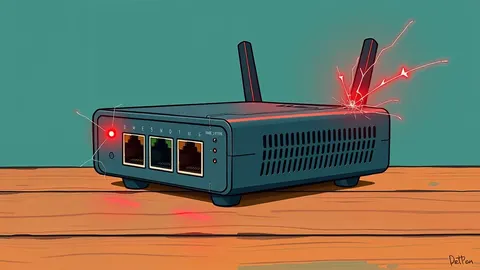
CVE-2026-40615: Authenticated Stack Overflow in Totolink X2000R Firmware Rated CVSS 9.1
Authentication is required to trigger the stack-based buffer overflow in the X2000R device management interface, leading to arbitrary code execution.
Key points
- CVE-2026-40615 affects the specific TOTOLINK-X2000R-Gh-V1.0.0-B20250421.1327 firmware build.
- The National Vulnerability Database rates the stack-based buffer overflow as Critical with a CVSS score of 9.1.
- An attacker must provide valid credentials to send the specially crafted HTTP request that triggers the flaw.
The National Vulnerability Database lists a critical vulnerability in Totolink X2000R router firmware that allows for remote code execution. The flaw, identified as CVE-2026-40615, stems from a stack-based buffer overflow within the web interface handling parental control settings.
What happened
A stack-based buffer overflow vulnerability exists in the boa web server functionality of the X2000R router. Specifically, the flaw is located in the formParentControl deviceName processing logic of the firmware version TOTOLINK-X2000R-Gh-V1.0.0-B20250421.1327. According to the National Vulnerability Database, this weakness is classified under CWE-121.
An attacker can trigger this vulnerability by sending a specially crafted HTTP request to the device. The NVD record states that the attacker must make an authenticated HTTP request to exploit the flaw. This means the threat actor must first obtain valid login credentials for the router's administrative interface before they can execute arbitrary code on the system.
Why it matters
The National Vulnerability Database assigns a CVSS score of 9.1 to this vulnerability, rating it as Critical. This high severity score reflects the potential for arbitrary code execution on the device. For security operations teams, this indicates that the router's integrity is fully compromised once the flaw is successfully triggered by an authenticated user.
The requirement for authentication changes the attack profile significantly. It suggests that the primary risk comes from compromised administrative credentials rather than unauthenticated remote exploitation. Teams managing environments with this specific firmware version must treat the administrative interface as a high-value target. If an attacker gains access to the login page, they have the key to full system control through this specific endpoint.
Our take on the response
- Verify the firmware version on all X2000R devices in the inventory against the affected build TOTOLINK-X2000R-Gh-V1.0.0-B20250421.1327.
- Restrict access to the administrative web interface to trusted networks only, preventing remote access from untrusted zones.
- Ensure that administrative credentials are strong and unique, as authentication is the prerequisite for exploitation.
- Monitor for any official statements from Totolink regarding a patch, though none is confirmed in the current records.
What defenders should look for
Teams usually investigate unusual outbound traffic from network appliances when investigating potential compromises. Check whether the router is establishing connections to unknown external IP addresses or domains that do not match its normal management or update patterns. Look for signs of persistent backdoors or new processes running on the device that were not present during baseline configuration. Examine logs for failed login attempts followed by successful administrative access, as the vulnerability requires valid credentials. Consider isolating the device from the trusted network to prevent lateral movement while analyzing its behavior.
Background: Lateral movement
Lateral movement is the process where an attacker navigates from one system to another within a network after initial access. They use stolen credentials or unpatched vulnerabilities to expand their reach. This tactic allows them to reach sensitive data or critical servers without triggering perimeter alarms, making internal monitoring the primary defense.
Read the full guide: Lateral Movement in Cybersecurity: Definition and Detection
What to do and how to stay safe: Totolink
- Audit all connected devices to confirm their firmware versions and identify any running the affected TOTOLINK-X2000R-Gh-V1.0.0-B20250421.1327 build.
- Change administrative passwords to strong, complex values and ensure they are not reused across other systems to protect the authentication requirement.
- Disable remote administrative access to the router if it is not strictly necessary for daily operations, limiting the attack surface to local network access.
- Review firewall rules to ensure the administrative interface is not exposed to the public internet or untrusted guest networks.
Step-by-step guide: Vulnerability Management Myths That Waste Your Time and Budget
General security guidance from the NetSec Tribune newsroom. It is not confirmed advice from the organisations named in this story.
Frequently asked questions
What is the CVE ID for the Totolink X2000R vulnerability?
The vulnerability is identified as CVE-2026-40615 in the National Vulnerability Database.
Does this vulnerability allow unauthenticated remote code execution?
No, the NVD record states that an attacker must make an authenticated HTTP request to trigger the vulnerability.
What firmware version is affected by CVE-2026-40615?
The affected version is specifically TOTOLINK-X2000R-Gh-V1.0.0-B20250421.1327.